🚀 Programming Example
Compare Average Scores and Find the Best Performing Group
Learn this program step-by-step with algorithm, source code, output and detailed explanation.
You are given three different groups, and you need to determine which group has performed the best based on their average scores. Write a Java program that:
"All groups have the same score."Enter the average score for Group 1: 75.5 Enter the average score for Group 2: 88.0 Enter the average score for Group 3: 83.5
The best performing group is Group 2 with an average score of: 88.0
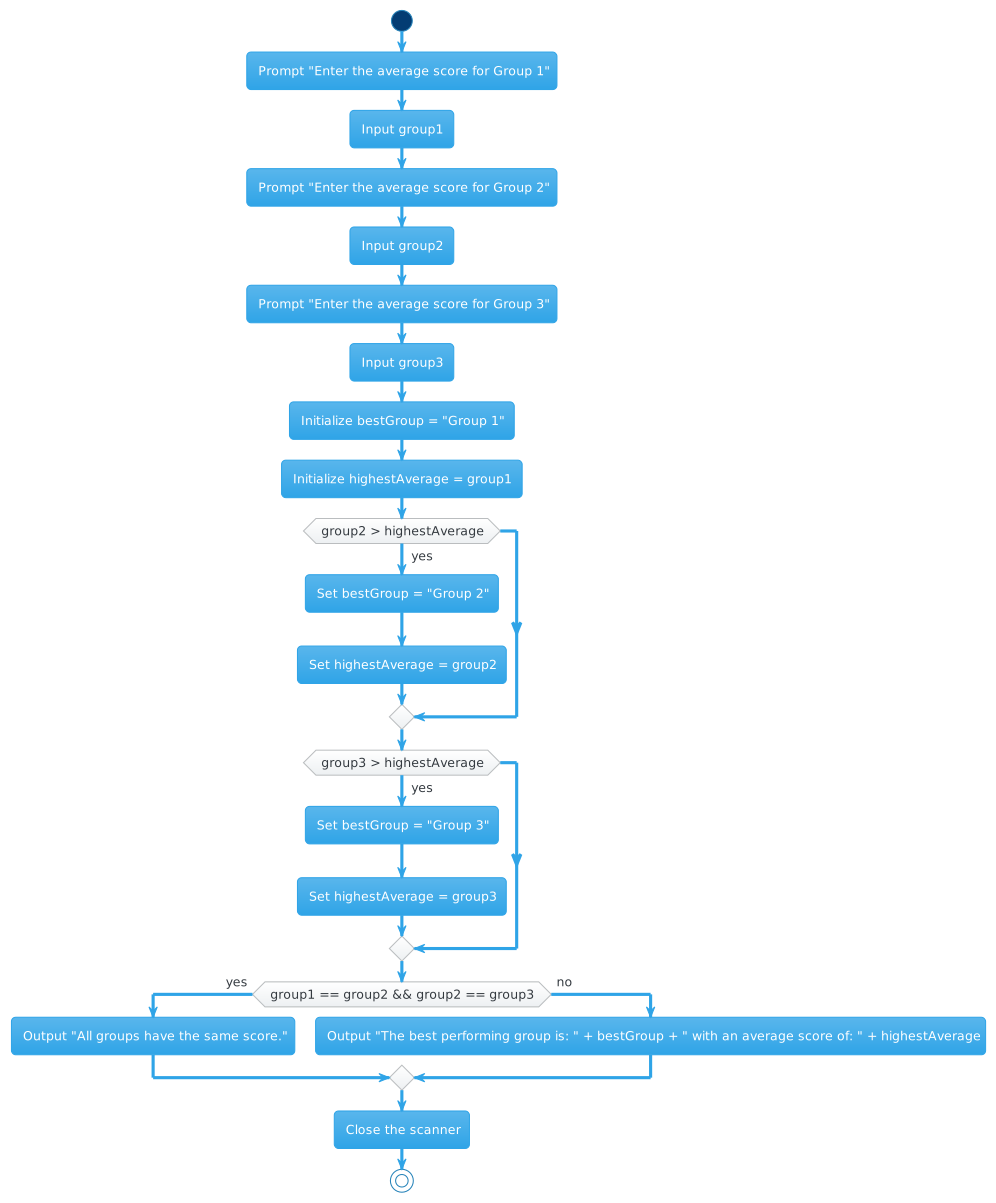
import java.util.Scanner;

public class BestPerformingGroup {

    public static void main(String[] args) {
        Scanner scanner = new Scanner(System.in);

        // Variables to store average scores for each group
        double group1, group2, group3;

        // Input the average scores for Group 1, Group 2, and Group 3
        System.out.print("Enter the average score for Group 1: ");
        group1 = scanner.nextDouble();

        System.out.print("Enter the average score for Group 2: ");
        group2 = scanner.nextDouble();

        System.out.print("Enter the average score for Group 3: ");
        group3 = scanner.nextDouble();

        // Determine the best-performing group
        String bestGroup = "Group 1";
        double highestAverage = group1;

        if (group2 > highestAverage) {
            bestGroup = "Group 2";
            highestAverage = group2;
        }

        if (group3 > highestAverage) {
            bestGroup = "Group 3";
            highestAverage = group3;
        }

        // Bonus Task: Check if all groups have the same score
        if (group1 == group2 && group2 == group3) {
            System.out.println("All groups have the same score.");
        } else {
            // Output the result
            System.out.println("\nThe best performing group is: " + bestGroup
                + " with an average score of: " + highestAverage);
        }

        // Close the scanner
        scanner.close();
    }
}
Inputs:
Scanner.Comparison:
bestGroup variable.Bonus Task:
"All groups have the same score." instead of declaring a "best" group.Output:
Sample Input:
Enter the average score for Group 1: 80.0
Enter the average score for Group 2: 80.0
Enter the average score for Group 3: 80.0
Sample Output:
All groups have the same score.
This assignment teaches the concepts of comparison logic and basic input/output handling in Java. The bonus task enhances their problem-solving skills by considering edge cases.
First understand the algorithm carefully. Then study the program line-by-line and compare it with the output. Finally, review the explanation section to strengthen your logic and programming understanding.
Rewrite the program without looking at the code. Modify values, conditions or logic and run it again. This helps improve confidence and strengthens coding skills much faster.