🚀 Programming Example
C Program to Check whether the Given String is a Palindrome
Palindrome is a string, which when read in both forward and backward way is same.
#include <stdio.h>
#include <string.h>

int main(){
    char string[20];
    int i, length;
    int flag = 0;

    printf("Enter a string:");
    scanf("%s", string);

    length = strlen(string);

    for(i=0;i < length ;i++){
        if(string[i] != string[length-i-1]){
            flag = 1;
            break;
   }
}

    if (flag) {
        printf("%s is not a palindrome\n", string);
    }
    else {
        printf("%s is a palindrome\n", string);
    }
    return 0;
}
<b>Output 1</b>
Enter a string:roor
roor is a palindrome
Press any key to continue . . .

<b>Output 2</b>
Enter a string:rum
rum is not a palindrome
Press any key to continue . . .
To check if a string is a palindrome or not, a string needs to be compared with the reverse of itself.
Consider a palindrome string: radar,
---------------------------
index: 0 1 2 3 4
value: r a d a r
---------------------------
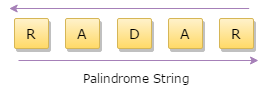
To compare it with the reverse of itself, the following logic is used:
First understand the algorithm carefully. Then study the program line-by-line and compare it with the output. Finally, review the explanation section to strengthen your logic and programming understanding.
Rewrite the program without looking at the code. Modify values, conditions or logic and run it again. This helps improve confidence and strengthens coding skills much faster.