
How C# Code Gets Compiled and Executed?
Table of Content:
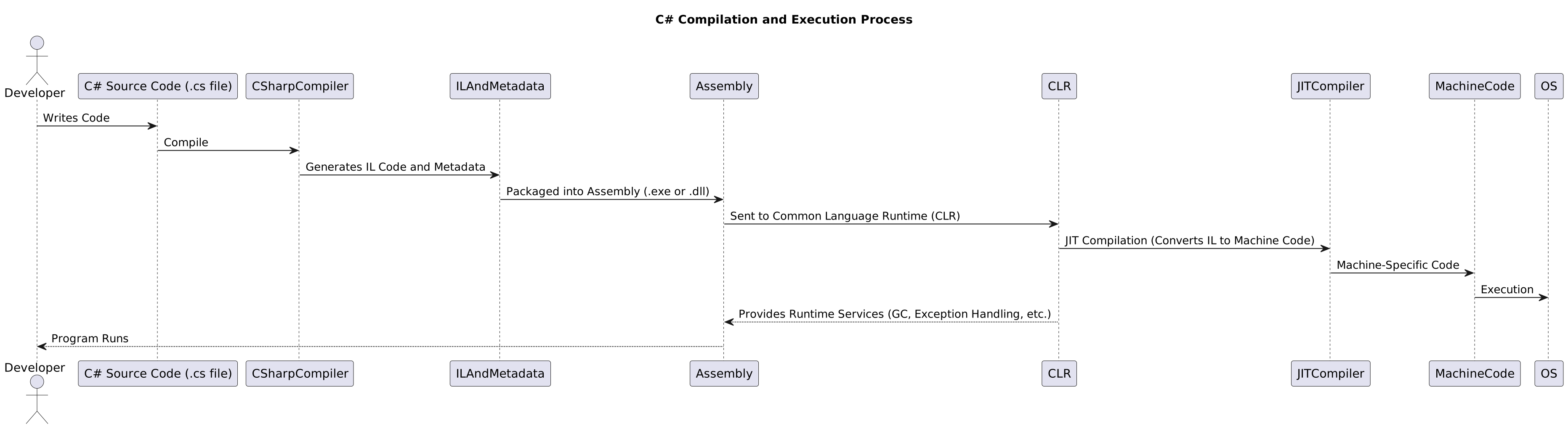
In C#, the compilation and execution process involves multiple steps, from converting human-readable code into machine code to executing the program on the system. Here's an overview of how C# code gets compiled and executed:
1. Writing C# Code
- You write C# code in a text editor or an Integrated Development Environment (IDE) like Visual Studio. The code is written in human-readable format, following C# syntax rules.
Example:
// C# source code
public class HelloWorld
{
    public static void Main()
    {
        System.Console.WriteLine("Hello, World!");
    }
}
2. Compilation to Intermediate Language (IL)
-
When you compile the C# code (by clicking 'Build' in Visual Studio or using the
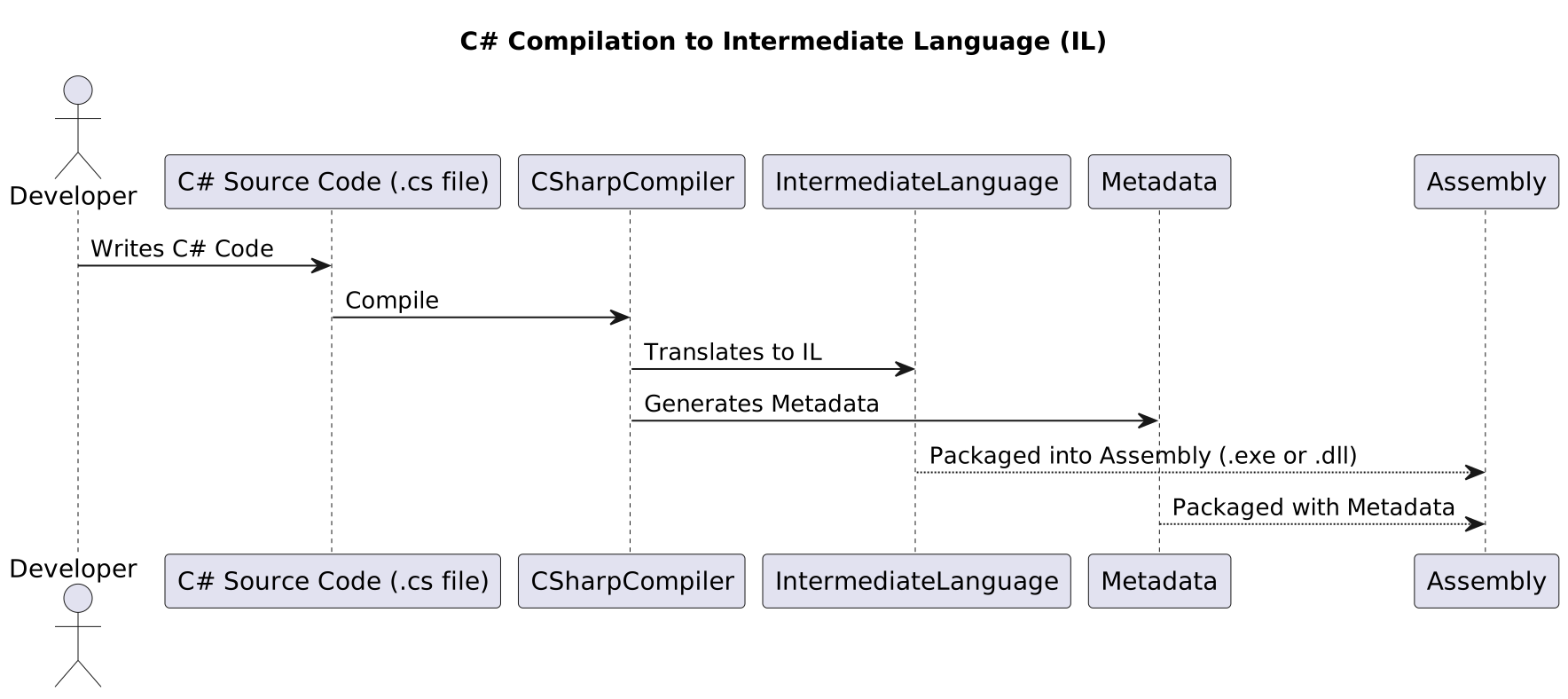
csccommand-line tool), the C# compiler (csc.exe) translates the C# source code into Microsoft Intermediate Language (MSIL) or simply Intermediate Language (IL). This is a low-level, platform-independent set of instructions that the .NET runtime can understand. -
The compiler also produces metadata, which contains information about the types, methods, and other elements of the code.
-
Output of this step: An assembly file, either a
.exe(for an executable) or a.dll(for a library), containing IL code and metadata.
After compilation, the above code is converted into IL.
3. Assembly (EXE or DLL)
- The compiled output (IL code + metadata) is packaged into an assembly (either a
.dllor.exefile). Assemblies are the deployable units in the .NET framework. - The assembly contains both the IL and metadata necessary for execution. Assemblies can also include resources like images, strings, etc.
4. Common Language Runtime (CLR)
- When you run the application (e.g., by double-clicking the
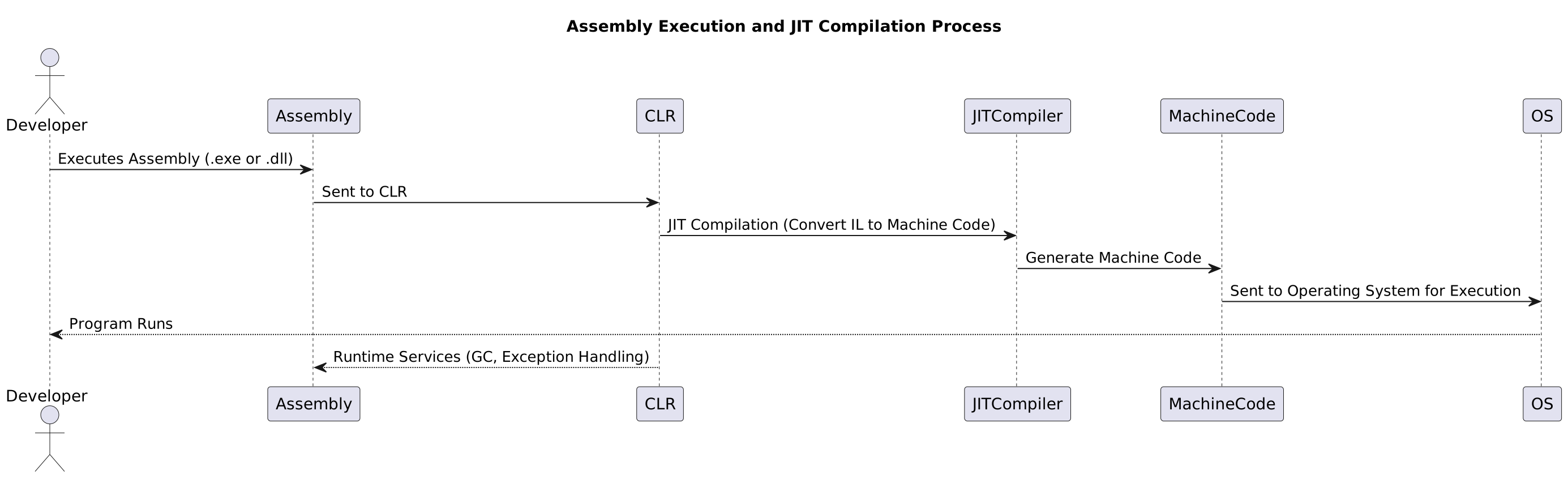
.exefile), the Common Language Runtime (CLR) takes over. - The CLR is part of the .NET framework responsible for managing code execution, memory management, exception handling, garbage collection, and security.
5. Just-In-Time (JIT) Compilation
- The CLR doesn't execute IL code directly. Instead, it uses the Just-In-Time (JIT) compiler to convert the IL code into machine code (platform-specific code) that the underlying operating system can understand.
- The JIT compilation happens on-demand. When a method is called for the first time, the JIT compiler compiles it into machine code, which is then cached for subsequent calls to improve performance.
Key Point: The JIT compilation happens at runtime, ensuring that the same IL can be run on any platform that supports .NET (Windows, Linux, etc.).
6. Execution
- Once the IL code is converted to machine code, the program is executed by the operating system with the help of the CLR.
- During execution, the CLR provides services like memory management, garbage collection, and exception handling, ensuring smooth and efficient execution of the program.
7. Garbage Collection
- C# uses automatic Garbage Collection (GC), which is handled by the CLR. The GC automatically deallocates memory for objects that are no longer in use, preventing memory leaks and optimizing memory usage.
- The garbage collector runs periodically and during memory-intensive operations to clean up unused objects.
8. Managed and Unmanaged Code
- The code that runs under the control of the CLR is called managed code. This code benefits from CLR services like garbage collection, type safety, and exception handling.
- Unmanaged code, such as native code written in C or C++, runs outside of the CLR. You can invoke unmanaged code from managed code using mechanisms like P/Invoke (Platform Invocation).
9. Execution Flow Summary
The overall flow of C# code execution can be summarized as:
- C# Source Code → compiled by C# Compiler (csc.exe) → IL code + metadata in assembly (.exe or .dll) → executed by CLR with JIT compilation → Machine Code → Program Execution.
Advanced Concepts:
-
Ahead-of-Time Compilation (AOT): In some cases, you can use Native Image Generator (NGEN) to pre-compile IL code into machine code before runtime, improving startup times.
-
Cross-Platform Execution with .NET Core: .NET Core (now part of .NET 5 and onwards) allows C# code to run on multiple platforms, including Windows, Linux, and macOS, by providing platform-specific CLR implementations.