
Iterative construct
Table of Content:
An iterative construct in programming refers to structures that allow a block of code to be executed repeatedly, typically until a certain condition is met. These constructs are essential for performing repetitive tasks, managing loops, and automating processes that require multiple iterations. The most common types of iterative constructs are loops, such as for, while, and do-while loops.
Types of iterative construct
The most common types of iterative constructs are loops, such as for, while, and do-while loops. In programming languages, there are typically three main types of loops:
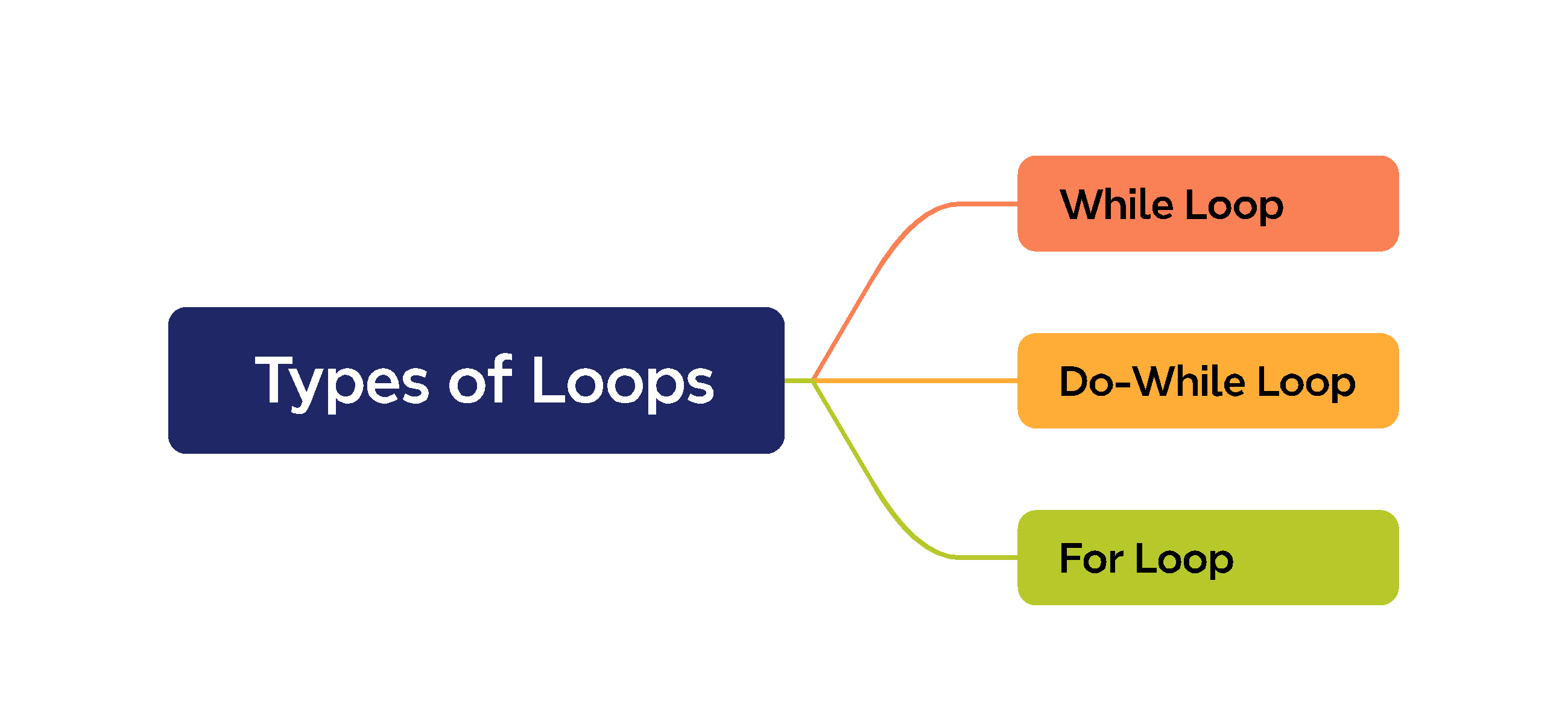
Types of Loops in Programming Languages
In addition to the three main types of loops (for, while, and do-while), there are a few other specialized or alternative loop types used in certain programming languages or contexts:
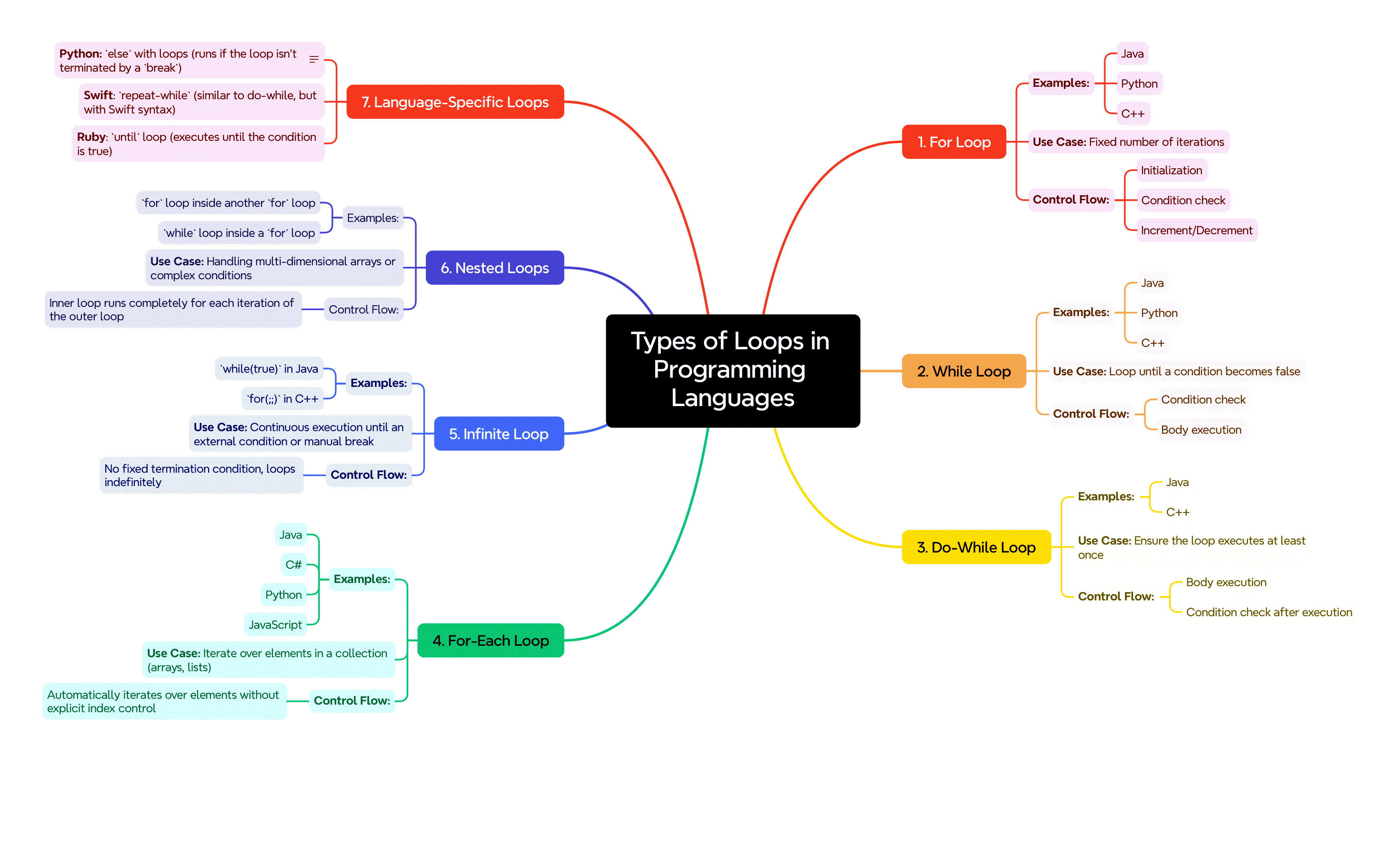
Characteristics of Iterative Constructs:
- Repetition: They repeat a block of code multiple times.
- Condition: Loops usually have a condition that determines whether the loop continues or stops.
- Termination: There is always some mechanism (like updating a variable) to ensure the loop eventually stops; otherwise, it may result in an infinite loop.
Common Use Cases for Iterative Constructs:
- Data Processing: Iterating over arrays, lists, or other data structures to perform operations on each element.
- Searching/Sorting: Many algorithms, like linear search and bubble sort, rely on iterative constructs to work through datasets.
- Automation: Repetitive tasks, such as sending emails to a list of recipients or generating a series of reports, are often handled with loops.