Alcoholic Fatty Liver Disease: Causes, Symptoms, Risks and How to Improve It
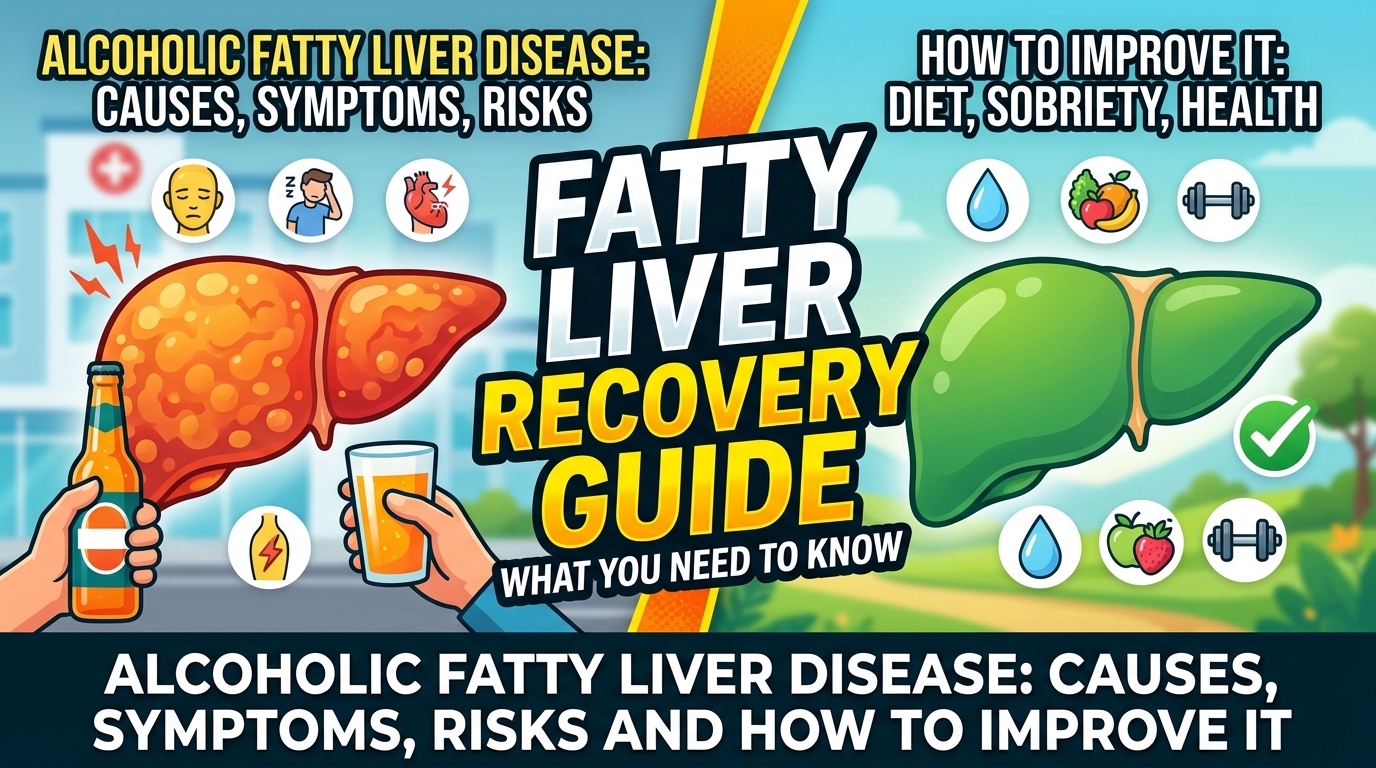
Alcoholic Fatty Liver Disease (AFLD) happens when too much fat builds up in the liver due to excessive alcohol consumption. The liver helps process alcohol, but drinking beyond the liver’s capacity can damage liver cells and cause fat accumulation.
Alcoholic fatty liver is considered the earliest stage of alcohol-related liver disease. The good news is that in many cases, it can improve or even reverse if alcohol use is stopped early.
What Is Alcoholic Fatty Liver?
Alcoholic fatty liver develops when excess alcohol changes the way the liver breaks down fats. As a result, fat starts collecting inside liver cells. In the beginning, this condition may not cause serious damage, but if alcohol use continues, it may progress to more severe liver problems.
Stages of Alcohol-Related Liver Disease
- Alcoholic Fatty Liver: Fat builds up in the liver.
- Alcoholic Hepatitis: Liver becomes inflamed and damaged.
- Fibrosis: Scar tissue starts forming.
- Cirrhosis: Severe permanent liver scarring develops.
Why Does Alcohol Cause Fatty Liver?
When the liver breaks down alcohol, harmful substances are produced that can damage liver cells and interfere with fat metabolism. This causes fat accumulation in the liver.
Common risk factors include:
- Heavy or frequent alcohol consumption
- Binge drinking
- Poor nutrition
- Obesity
- Diabetes
- High cholesterol
- Family history of liver disease
Symptoms of Alcoholic Fatty Liver
In early stages, many people may not notice symptoms. Some may experience:
- Fatigue
- Weakness
- Discomfort or heaviness on the right side of abdomen
- Loss of appetite
- Nausea
- Abnormal liver function tests
Can Alcoholic Fatty Liver Be Reversed?
Yes, in many early cases alcoholic fatty liver can improve and sometimes reverse if alcohol is stopped completely. The liver has a strong ability to heal when damage is not advanced.
How to Improve or Recover
1. Stop Alcohol Completely
The most important treatment is avoiding alcohol. Continuing to drink can worsen liver damage. Many people see improvement after stopping alcohol completely.
2. Follow a Healthy Diet
- Eat fruits and vegetables
- Choose whole grains
- Take protein-rich foods in balanced amounts
- Avoid fried and processed foods
- Reduce sugary foods and drinks
- Stay hydrated
3. Correct Nutritional Deficiency
People with alcohol-related liver disease often have vitamin deficiencies. A doctor may recommend nutritional support if needed.
4. Exercise Regularly
Regular physical activity can reduce liver fat and improve overall metabolic health.
5. Manage Other Health Conditions
- Control diabetes
- Manage cholesterol
- Maintain healthy body weight
- Monitor blood pressure
Foods Helpful for Liver Health
- Leafy green vegetables
- Fruits
- Oats and whole grains
- Nuts in moderation
- Fish (if suitable)
- Coffee in moderation may support liver health in some cases
Foods and Habits to Avoid
- Alcohol (most important)
- Fried foods
- Highly processed foods
- Too much sugar
- Smoking
- Self-medication without doctor advice
When to See a Doctor Immediately
Seek medical advice if you notice:
- Yellowing of eyes or skin (jaundice)
- Swollen abdomen
- Vomiting blood
- Confusion
- Severe weakness
- Persistent abdominal pain
These may suggest advanced liver damage and need urgent evaluation.
How Is It Diagnosed?
- Liver function blood tests
- Ultrasound
- FibroScan
- CT or MRI in some cases
- Liver biopsy in selected cases
Conclusion
Alcoholic fatty liver is an early warning sign that the liver is under stress. The encouraging part is that early-stage damage can often improve if alcohol is stopped, nutrition is improved, and healthy lifestyle changes are made. Early action can prevent serious liver disease.
Medical Disclaimer: This article is for educational purposes only and is not a substitute for professional medical advice. Consult a qualified doctor for diagnosis and treatment.