Heat Stroke in Summer: Causes, Symptoms, Prevention and What To Do
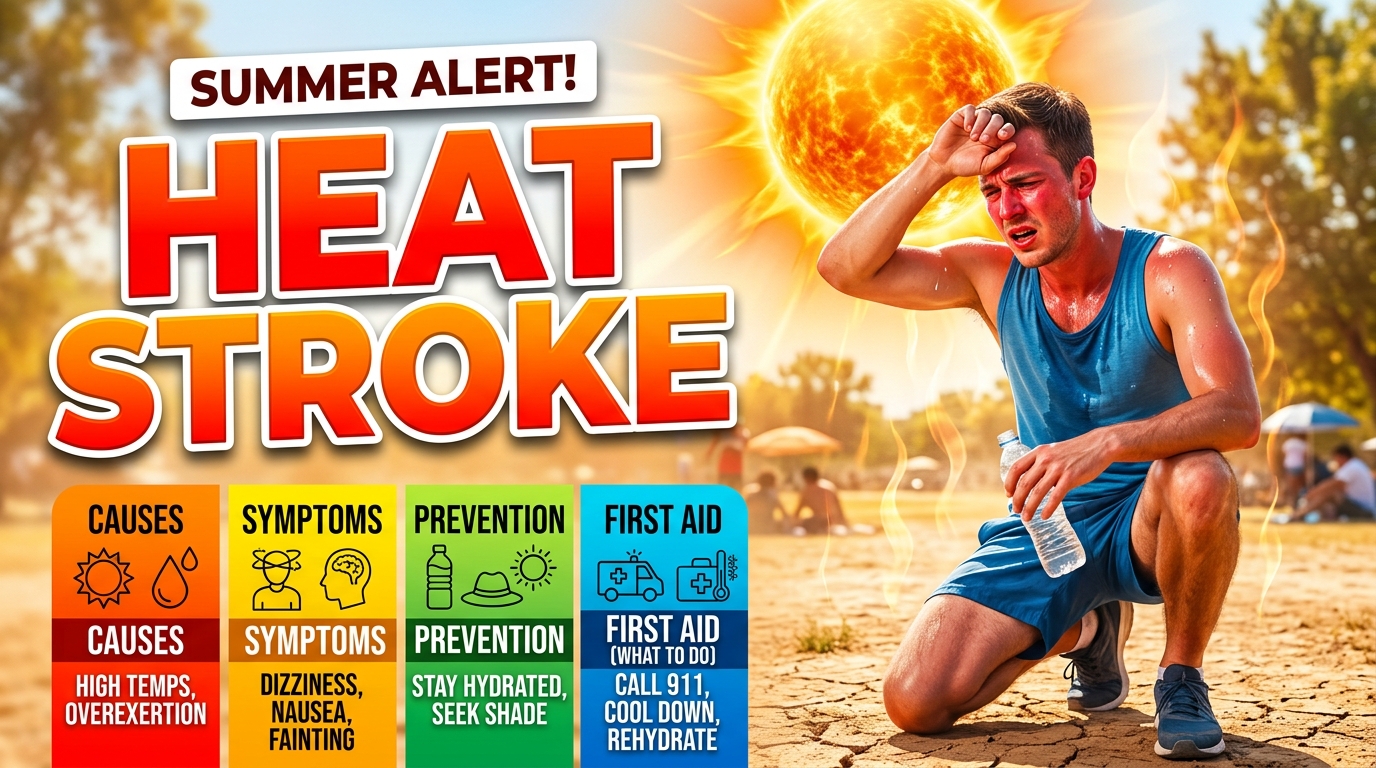
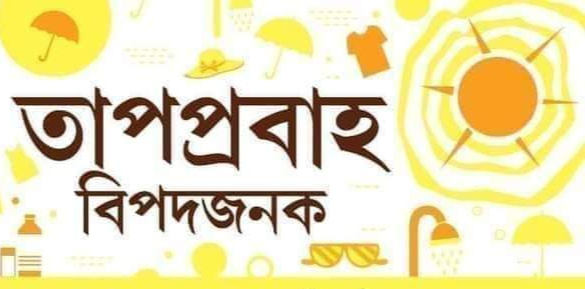
Heat stroke is a serious condition that can happen in very hot weather when the body overheats and cannot cool itself properly. It is considered a medical emergency and can become dangerous if not treated quickly.
During summer, high temperature, dehydration, and too much exposure to sunlight can increase the risk of heat stroke, especially in children, elderly people, outdoor workers, and people with health conditions.
What Is Heat Stroke?
Normally, the body controls temperature through sweating. But when extreme heat overwhelms the body's cooling system, body temperature may rise dangerously high, often above 104°F (40°C), causing heat stroke.
Why Does Heat Stroke Happen?
Heat stroke can happen due to:
- Too much exposure to direct sun
- High temperature and humidity
- Dehydration
- Working outdoors in hot weather
- Heavy exercise in extreme heat
- Wearing thick or tight clothing
- Not drinking enough water
- Staying in poorly ventilated rooms
Who Is at Higher Risk?
- Children
- Elderly people
- Outdoor laborers
- Athletes
- People with heart disease or diabetes
- People who become dehydrated easily
Symptoms of Heat Stroke
Common warning signs include:
- Very high body temperature
- Hot, red or dry skin
- Heavy sweating or sometimes no sweating
- Severe headache
- Dizziness
- Nausea or vomiting
- Rapid heartbeat
- Confusion
- Weakness
- Fainting
- Difficulty breathing
Emergency Symptoms (Get Help Immediately)
- Loss of consciousness
- Seizures
- Confusion or unusual behavior
- Very high fever
- Collapse
Heat stroke can be life-threatening and may need immediate medical attention.
First Aid for Heat Stroke
What To Do Immediately
- Move the person to shade or a cool place
- Loosen or remove extra clothing
- Give cool water if the person is conscious
- Use wet cloths on head, neck and body
- Use a fan for cooling
- Apply ice packs to neck, armpits and groin if available
- Call medical help immediately for severe symptoms
How To Prevent Heat Stroke
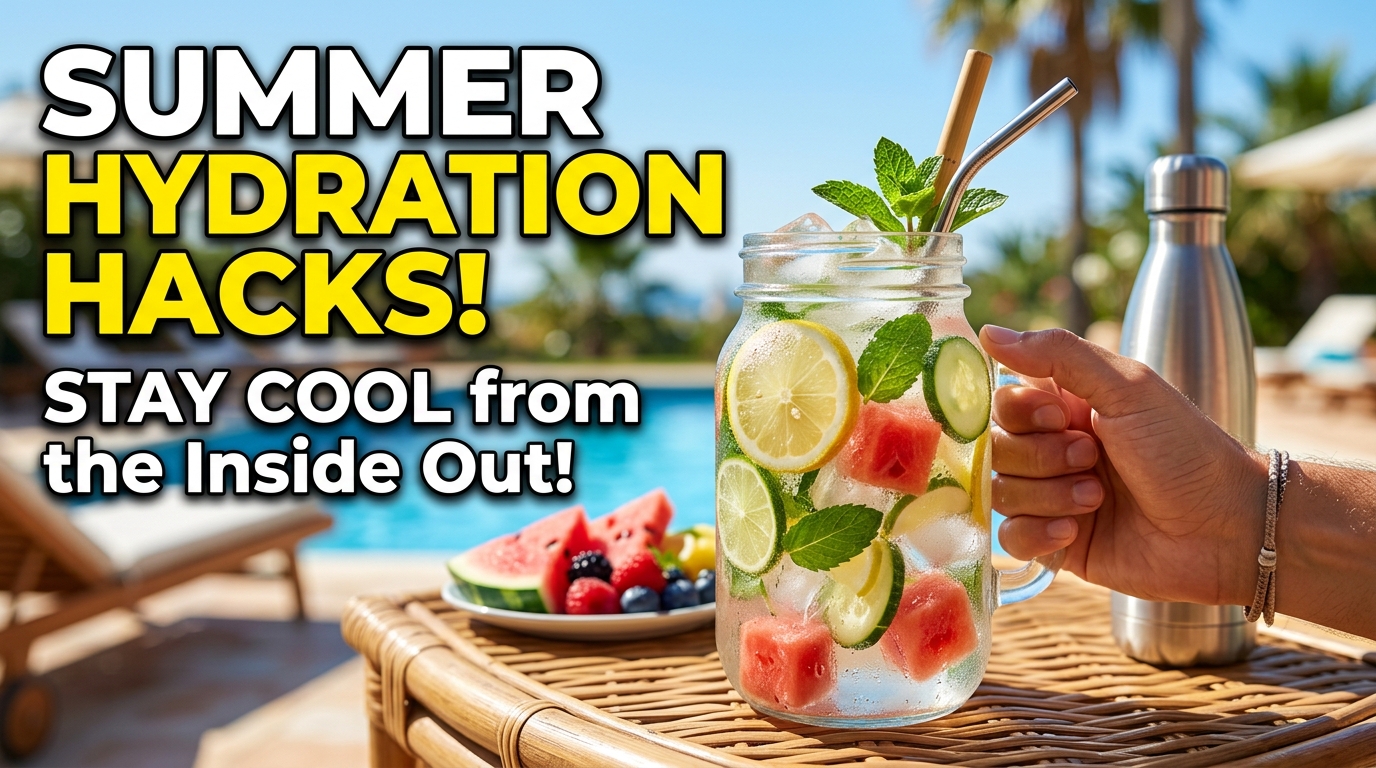
1. Stay Hydrated
- Drink water regularly
- Use ORS if needed during heavy sweating
- Do not wait until you feel thirsty
2. Avoid Peak Heat Hours
Try to avoid going out between 12 PM to 4 PM when sunlight is strongest.
3. Wear Light Clothing
- Loose cotton clothes
- Light-colored clothing
- Use cap, umbrella or hat outdoors
4. Keep Body Cool
- Take cool showers if needed
- Stay in well-ventilated rooms
- Use fan or cooler
Summer Foods and Drinks That Help
- Water
- Coconut water
- Lemon water
- Buttermilk
- Watermelon
- Cucumber
- Orange
- Curd
- Seasonal juicy fruits
Things to Avoid in Extreme Heat
- Too much tea or coffee
- Alcohol
- Very spicy heavy meals
- Long sun exposure
- Skipping water intake
- Overexertion outdoors
Difference Between Heat Exhaustion and Heat Stroke
| Heat Exhaustion | Heat Stroke |
|---|---|
| Heavy sweating | Very high body temperature |
| Weakness and dizziness | Confusion or collapse |
| Usually less severe | Medical emergency |
| Needs cooling and rest | Needs urgent treatment |
Conclusion
Heat stroke is a serious summer health problem, but it is often preventable. Drinking enough water, avoiding strong sun, staying cool, and recognizing warning signs early can help protect you and your family.
Medical Disclaimer: This article is for educational purposes only and not a substitute for professional medical advice.