Non-Alcoholic Fatty Liver: Meaning, Causes, Symptoms, and How to Improve It
Non-alcoholic fatty liver disease, also called NAFLD or now commonly known as MASLD, is a condition where extra fat builds up inside the liver, even when a person does not drink alcohol or drinks very little. A small amount of fat in the liver is normal, but too much fat can slowly affect liver health.
What Is Non-Alcoholic Fatty Liver?
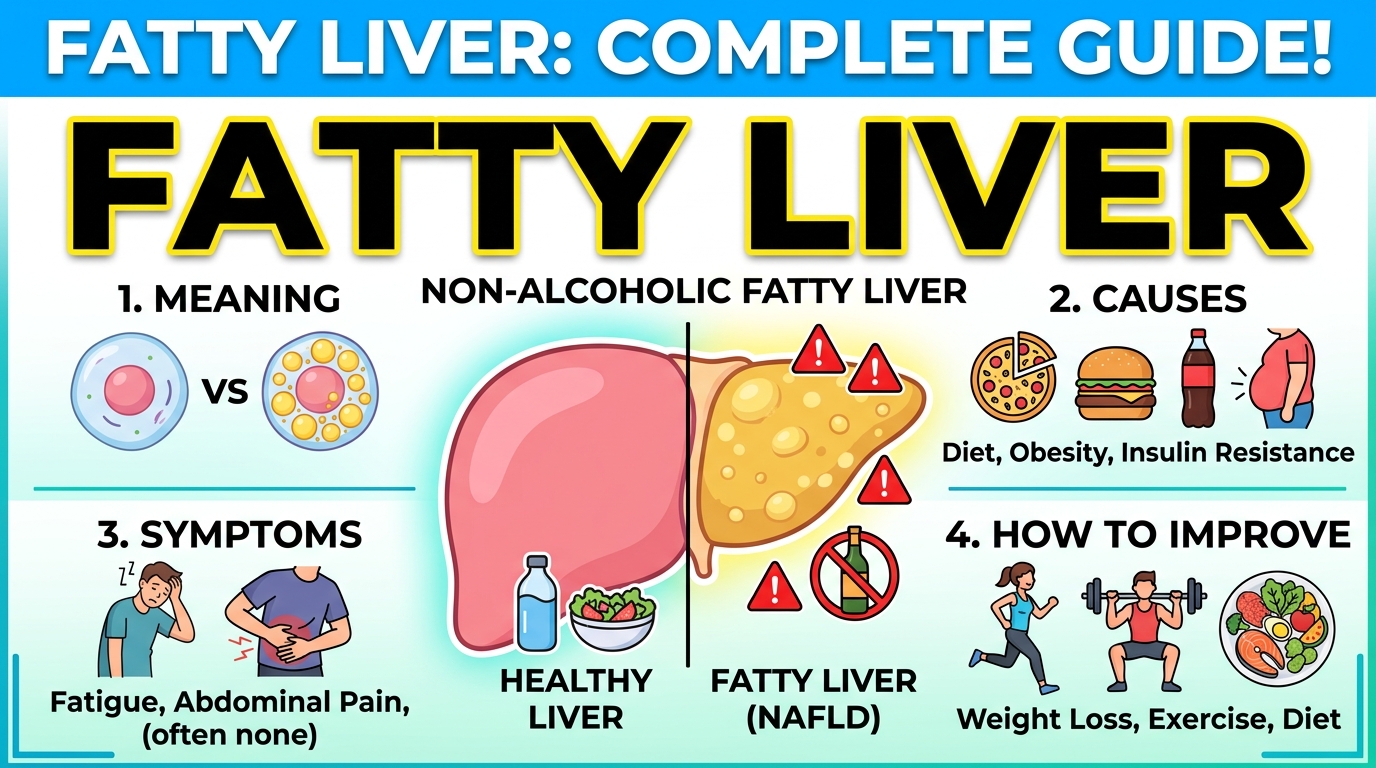
Non-alcoholic fatty liver means fat has collected in liver cells due to reasons other than alcohol. In the early stage, it may not cause serious problems, but in some people it can lead to liver inflammation, scarring, and severe liver disease if ignored. :contentReference[oaicite:0]{index=0}
Why Does Fatty Liver Happen?
Fatty liver usually happens because of lifestyle and metabolic health issues. Common causes include being overweight, belly fat, insulin resistance, type 2 diabetes, high cholesterol, high triglycerides, high blood pressure, unhealthy food habits, and lack of physical activity. :contentReference[oaicite:1]{index=1}
Common Symptoms
Many people do not feel any symptoms in the early stage. Some may feel tiredness, weakness, heaviness or mild pain in the upper right side of the abdomen, or abnormal liver test results during routine blood tests.
How to Improve or Reverse Fatty Liver
The most important treatment is lifestyle improvement. Gradual weight loss can reduce liver fat. Losing even 3% to 5% of body weight can reduce fat in the liver, while 7% to 10% weight loss may help reduce inflammation and scarring risk. Rapid weight loss should be avoided. :contentReference[oaicite:2]{index=2}
1. Improve Your Diet
- Eat more vegetables, fruits, whole grains, pulses, nuts, and seeds.
- Choose healthy protein such as dal, beans, eggs, fish, paneer in moderation, or lean meat.
- Reduce sugar, sweets, cold drinks, packaged juice, bakery items, fried foods, and processed snacks.
- Limit refined carbohydrates like white bread, maida, and excess white rice.
- Control portion size and avoid overeating at night.
2. Exercise Regularly
Physical activity helps reduce liver fat, even if weight loss is slow. Aim for regular walking, cycling, swimming, or any moderate exercise. Strength training also helps improve metabolism. :contentReference[oaicite:3]{index=3}
3. Control Diabetes, Cholesterol, and Blood Pressure
Fatty liver is strongly connected with metabolic problems. Keeping blood sugar, cholesterol, triglycerides, and blood pressure under control protects both the liver and heart.
4. Avoid Alcohol and Unnecessary Medicines
Even though this condition is called non-alcoholic fatty liver, alcohol can still add extra stress to the liver. Also, avoid taking painkillers, supplements, or herbal medicines without medical advice.
When Should You Consult a Doctor?
Consult a doctor if your liver enzymes are high, ultrasound shows fatty liver, you have diabetes or obesity, or you feel continuous tiredness, abdominal pain, yellow eyes, swelling, or unexplained weight loss.
Conclusion
Non-alcoholic fatty liver is common, but it should not be ignored. The good news is that early fatty liver can often be improved with gradual weight loss, healthy eating, regular exercise, and control of diabetes, cholesterol, and blood pressure. Always follow your doctor’s advice for diagnosis and treatment.
Medical Disclaimer: This article is for educational purposes only. It is not a replacement for medical consultation.